
DAN ARIELY

The most influential voice on behavioral economics; an expert on how (and why) people act in all kinds of environments


  • Professor of psychology and behavioral economics at Duke University
  • Founding member of the Center for Advanced Hindsight
  • Author of the bestsellers Predictably Irrational, The Upside of Irrationality, The Honest Truth About Dishonesty, among others
  • Co-creator of the film documentary (Dis)Honesty: The Truth About Lies; where he identifies what keeps us honest, pointing the way for achieving higher ethics in our everyday lives
  • Featured by Fortune magazine as one of the "10 gurus you should know”

Dan Ariely is one of today’s most prominent voices in behavioral economics. A professor of Psychology and Behavioral Economics at Duke University, he is dedicated to understanding why people so often act against their own best interests, and how we can make better, more sensible decisions, even if we are not always fully rational.

His interests span a wide range of human behaviors, and his sometimes unusual experiments are consistently engaging, amusing, and deeply informative. Through his work, Ariely demonstrates powerful insights that frequently challenge conventional wisdom about decision-making, motivation, ethics, and human behavior.

Ariely’s immersive introduction to irrationality began while he was recovering from severe injuries sustained in an explosion. During extensive treatments in a burn unit, he observed a variety of irrational behaviors that were both painful and persistent. These experiences sparked his early research into how people respond to pain and how unavoidable treatments could be delivered more effectively—research that ultimately evolved into a broader exploration of decision-making and behavioral economics.

As his research progressed, Ariely became increasingly fascinated by the idea that people repeatedly and predictably make poor decisions in many aspects of life, and that systematic research could help change these patterns. He later realized that understanding decision-making could benefit not only academics and organizations, but anyone navigating everyday life.

As a behavioral economist, Dan Ariely studies how people actually behave in the marketplace, rather than how they would behave if they were fully rational. His work explores decision-making across business, economics, ethics, health, and public policy. His experiments are known for being insightful, entertaining, and accessible, revealing why irrational behavior is often systematic and predictable.

In addition to his academic work, Ariely has advised governments in South Africa, the Netherlands, Brazil, the United Kingdom, the United States, Saudi Arabia, and Israel. His applied projects have focused on helping historically excluded populations stay in school, supporting women in accessing employment opportunities, encouraging more young people (especially girls) to study computer science, reducing traffic congestion, cutting government bureaucracy, addressing prostitution, strengthening trust between governments and citizens, and in-creasing motivation among principals, teachers, and students.

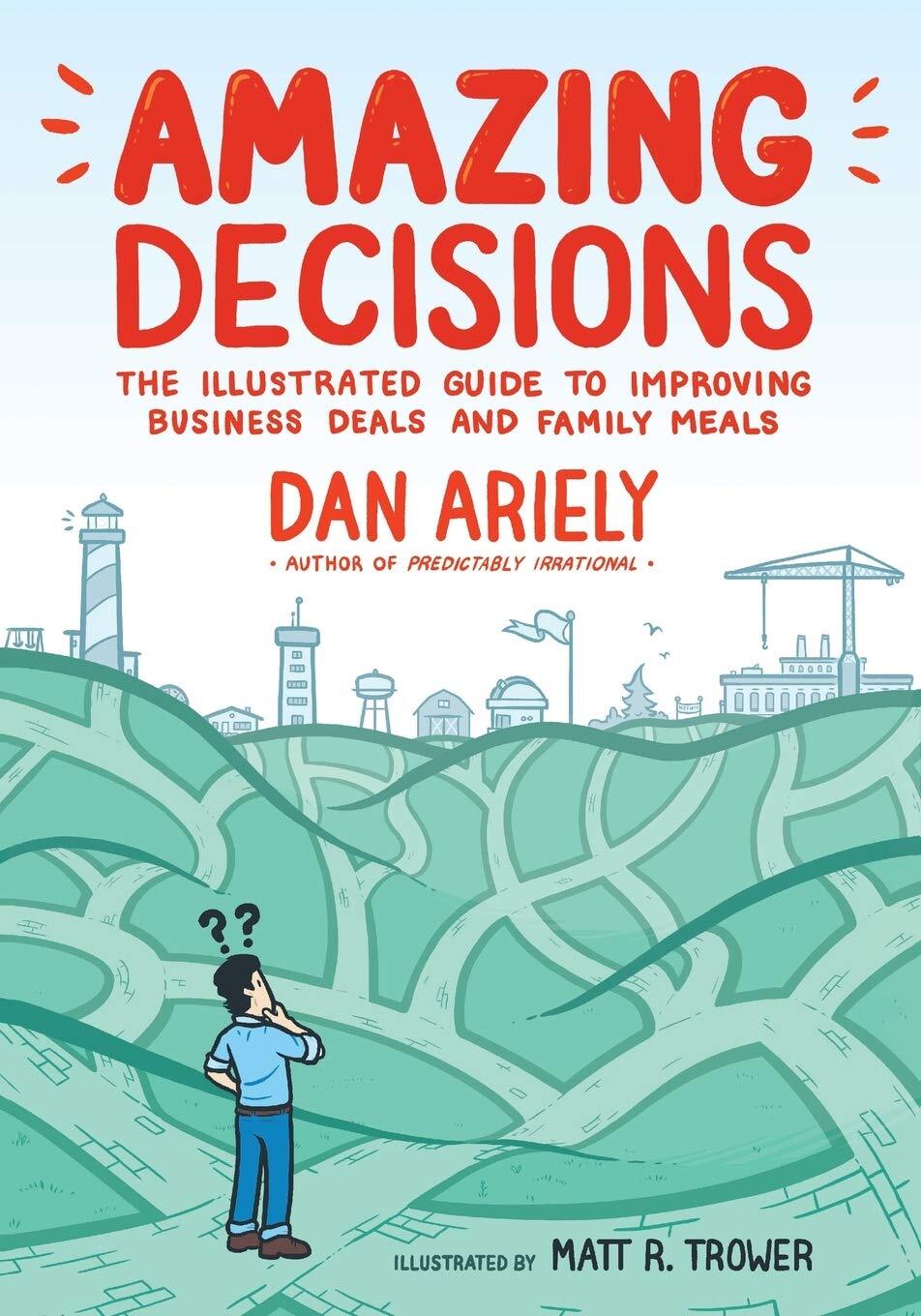
Dan Ariely is the author of several international bestsellers, including Predictably Irrational, The Upside of Irrationality, The Honest Truth About Dishonesty, Irrationally Yours, Payoff, Dollars and Sense, and Amazing Decisions. His latest book, Misbelief, examines how false beliefs take hold and why people continue to embrace them despite clear evidence to the contrary. His first book, Predictably Irrational, also served as the inspiration for the hit NBC television series The Irrational.

Ariely is a founding member of the Center for Advanced Hindsight and co-creator of the documentary (Dis)Honesty: The Truth About Lies, which explores what drives unethical behavior and what helps people remain honest in everyday life. His research has been widely published in leading academic journals and featured in major media outlets including The New York Times, The Wall Street Journal, The Washington Post, Scientific American, CNN, NPR, and ABC’s 20/20.

As a speaker, Dan Ariely has a rare talent for transforming complex research into compelling stories and practical insights. His presentations are engaging, humorous, and highly relevant, offering audiences actionable takeaways while challenging them to rethink how they make decisions at work and in life.

Dan Ariely received a Ph.D. in Marketing from Duke University, a Ph.D. and M.A. in Cognitive Psychology from the University of North Carolina at Chapel Hill, and a B.A. in Psychology from Tel Aviv University.
Professor Ariely tailors each presentation to the needs of his audience and is not limited to the topics we have listed below:

  • Environment
  • Behavioral Economics 
  • Marketing and Innovation
  • Consumer Behavior
  • Leadership
  • Management
  • Human Resources
  • Financial Services
  • Ethics

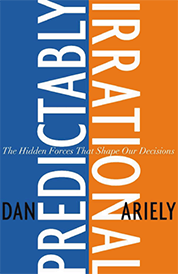
Predictably Irrational: Do you know why you still have a headache after taking a one-cent aspirin, but why that same headache disappears if the aspirin costs fifty cents? Do you know why recalling the Ten Commandments reduces people's tendency to lie, or why honor codes are actually effective in reducing dishonesty at the workplace? Do you know why, after doing careful and extensive research on which car to buy, a random meeting with someone who had an awful experience with that car changes your decision? Why do we make decisions contrary to our better judgment? What is "better judgment?"  In his book Predictably Irrational, Dan Ariely challenges us to ponder these questions and demonstrates how irrationality manifests itself in situations where rational thought is expected. We all succumb to irrationality, it's about time we find solutions to those behaviors that affect our daily lives in a significant way. 

He can also speak specifically to the following topics: 

  • Marketing and Innovation: Understand your customers better. 
  • Consumer Behavior: Predictably Irrational Customers: optimizing choices for how people really buy, not how we think they buy 
  • Electronic Commerce: Learn how people behave and make economic decisions online.  
  • Leadership and Management: How to make better and more strategic decisions. 
  • Human Resources: Predictably Irrational Employees: recruitment & retention issues. 
  • Financial Services: Understand the psychology of money. How do your clients think about money? What motivates people to save? What motivates people to invest?

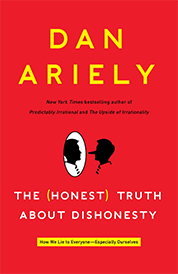
The Honest Truth about Dishonesty

Most of us think of ourselves as honest, but, in fact, we all cheat. So claims Dan Ariely. He challenges our preconceptions about dishonesty and urges us to take an honest look at ourselves. From Washington to Wall Street, the classroom to the workplace, unethical behavior is everywhere. None of us is immune, whether it's the white lie to head off trouble or padding our expense reports. Yet, we tend to assume that cheating, like most other decisions, is based on a rational cost-benefit analysis.

Based on the findings in his best-seller, The Honest Truth about Dishonesty, Ariely argues that it's actually the irrational forces that we don't take into account that often determine whether we behave ethically or not. For every Enron or political bribe, there are countless puffed resumes, hidden commissions, and knockoff purses. Audiences will hear why some things are easier to lie about; how getting caught matters less than we think; and how business practices pave the way for unethical behavior, both intentionally and unintentionally. But all is not lost. Dan also identifies what keeps us honest, pointing the way for achieving higher ethics in our everyday lives. It's a presentation not to be missed.

Predictably Irrational

When it comes to making decisions in our lives, we think we're in control. We think we're making smart, rational choices. But are we? In a series of illuminating, often surprising experiments, behavioral economist Dan Ariely refutes the common assumption that we behave in fundamentally rational ways. Blending everyday experience with groundbreaking research, Dan explains how expectations, emotions, social norms, and other invisible, seemingly illogical forces skew our reasoning abilities.

Not only do we make astonishingly simple mistakes every day, but we make the same types of mistakes, Ariely discovers. We consistently overpay, underestimate, and procrastinate. We fail to understand the profound effects of our emotions on what we want, and we overvalue what we already own. Yet these misguided behaviors are neither random nor senseless. They're systematic and predictable - making us predictably irrational. From drinking coffee to losing weight, from buying a car to choosing a romantic partner, Ariely explains how to break through these systematic patterns of thought to make better decisions. Predictably Irrational will change the way we interact with the world, one small decision at a time.

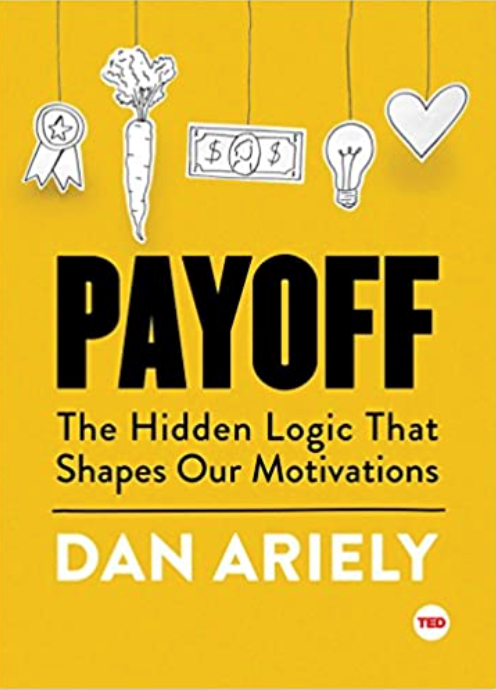
Payoff: The Hidden Logic That Shapes Our Motivations

Best-selling author Dan Ariely reveals fascinating new insights into motivation - showing that the subject is far more complex than we ever imagined.

Every day we work hard to motivate ourselves, the people we live with, the people who work for and do business with us. In this way much of what we do can be defined as being motivators. From the boardroom to the living room, our role as motivators is complex, and the more we try to motivate partners and children, friends and coworkers, the clearer it becomes that the story of motivation is far more intricate and fascinating than we've assumed.

Payoff investigates the true nature of motivation, our partial blindness to the way it works, and how we can bridge this gap. With studies that range from Intel to a kindergarten classroom, Ariely digs deep to find the root of motivation - how it works and how we can use this knowledge to approach important choices in our own lives. Along the way he explores intriguing questions such as: Can giving employees bonuses harm productivity? Why is trust so crucial for successful motivation? What are our misconceptions about how to value our work? How does your sense of your mortality impact your motivation?