
TAL BEN-SHAHAR

Pioneer of Positive Psychology. Bestselling Author and Global Authority on Happiness, Leadership, and Resilience


  • Creator of Harvard University's most popular course on Positive Psychology and founder of the world's first Master's and Ph.D. programs in Happiness Studies
  • Internationally renowned author of eight books, including the New York Times bestseller Happier, whose work has shaped the global conversation on well-being, leadership, and human flourishing
  • Trusted advisor to multinational corporations, educational institutions, and leaders worldwide, helping individuals and organizations achieve sustainable success through happiness, resilience, mindfulness, and purpose-driven leadership

Tal Ben-Shahar, Ph.D., is an author and lecturer who taught the most popular course at Harvard University on "Positive Psychology," and the university's third most popular course on "The Psychology of Leadership", with a total of more than 1,400 students.

In 2022, he designed and launched the world's first Master's Degree in Happiness Studies, and in 2025 created the world's first Ph.D. degree in the same field, both fully online, and in collaboration with Centenary University.

Ben-Shahar consults and lectures around the world to executives in multi-national corporations, the general public, and at-risk populations. Topics include leadership, ethics, happiness, self-esteem, resilience, goal setting, and mindfulness.

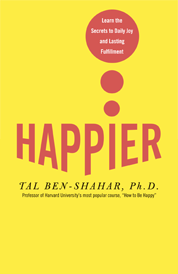
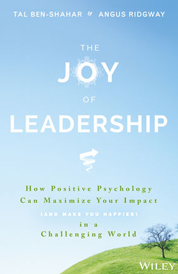
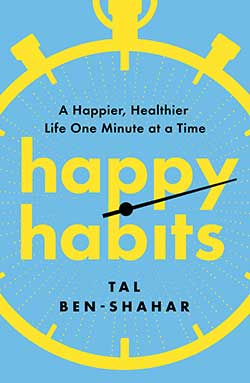
He is the author of eight books including the recently released Happy Habits: A Happier, Healthier Life One Minute at a Time, The Joy of Leadership: How Positive Psychology Can Maximize Your Impact (and Make You Happier) in a Challenging World, and The New York Times bestseller Happier: Learn the Secrets to Daily Joy and Lasting Fulfillment.

Ben-Shahar is a serial entrepreneur and is the co-founder and chief learning officer of the Happiness Studies Academy (HSA), Potentialife, VIVID, Maytiv, and Happier.TV.

An avid sportsman, Ben-Shahar won the U.S. Intercollegiate and Israeli National squash championships. He earned his Ph.D. in Organizational Behavior and B.A. in Philosophy and Psychology from Harvard.
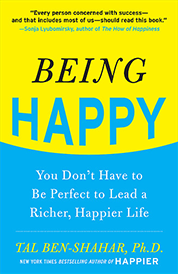
Tal Ben-Shahar tailors each presentation to the needs of his audience and is not limited to the topics listed below. Please ask us about any subject that interests you:

  • Positive Psychology for Difficult Times
  • Leading With Impact: Strategies for Success
  • Overcoming Perfectionism: The Permission to be Human
  • Positive Psychology: The Science of Happiness
  • Positive Leadership: Making a Difference
  • The Psychology of Success: The Power of Beliefs
  • The Question of Happiness: On Finding Meaning, Pleasure and the Ultimate Currency

Happiness Lessons - Advice from Tal Ben-Shahar

Lesson 1

Give yourself permission to be human. When we accept emotions—such as fear, sadness, or anxiety—as natural, we are more likely to overcome them. Rejecting our emotions, positive or negative, leads to frustration and unhappiness. We are a culture obsessed with pleasure and believe that the mark of a worthy life is the absence of discomfort; and when we experience pain, we take it to indicate that something must be wrong with us. In fact, there is something wrong with us if we don't experience sadness or anxiety at times--which are human emotions. The paradox is that when we accept our feelings—when we give ourselves the permission to be human and experience painful emotions—we are more likely to open ourselves up to positive emotions.

Lesson 2

Happiness lies at the intersection between pleasure and meaning. Whether at work or at home, the goal is to engage in activities that are both personally significant and enjoyable. When this is not feasible, make sure you have happiness boosters, moments throughout the week that provide you with both pleasure and meaning. Research shows that an hour or two of a meaningful and pleasurable experience can affect the quality of an entire day, or even a whole week.

Lesson 3

Keep in mind that happiness is mostly dependent on our state of mind, not on our status or the state of our bank account. Barring extreme circumstances, our level of well being is determined by what we choose to focus on and by our interpretation of external events. For example, do we focus on the empty part of the full part of the glass? Do we view failures as catastrophic, or do we see them as learning opportunities?

Lesson 4

Simplify! We are, generally, too busy, trying to squeeze in more and more activities into less and less time. Quantity influences quality, and we compromise on our happiness by trying to do too much. Knowing when to say 'no' to others often means saying 'yes' to ourselves.

Lesson 5

Remember the mind-body connection. What we do—or don't do—with our bodies influences our mind. Regular exercise, adequate sleep, and healthy eating habits lead to both physical and mental health.

Lesson 6

Express gratitude, whenever possible. We too often take our lives for granted. Learn to appreciate and savor the wonderful things in life, from people to food, from nature to a smile.

Lesson 7

Prioritize relationships. The number one predictor of happiness is the time we spend with people we care about and who care about us. The most important source of happiness may be the person sitting next to you. Appreciate them, savor the time you spend together.

Positive Psychology: The Science of Happiness

Positive Psychology, "the scientific study of optimal human functioning," provides practical tools for better living. This new subfield within psychology is unique in that it creates a bridge between the Ivory Tower and Main Street -- making rigorous academic ideas easily accessible. In this session, Ben-Shahar discusses current research related to the science of happiness and introduces ideas and tools that can actually make you happier. He covers topics including giving ourselves the permission to be human, simplifying our lives, recognizing the mind-body connection, and re-focusing on the positive.

Positive Leadership: Strategies for Success

Most organizational and individual potential is untapped. Talented individuals are attracted to and thrive in organizations that bring out the best in them. Ben-Shahar discusses how leaders can create a positive environment that nurtures their inherent potential, as well as the potential in those with whom they work. Ben-Shahar presents research and practices from the world of Appreciative Inquiry, and the Strengths-based Approach to Leadership and Organizational Development and illustrates how to blend them into an approach that underpins extraordinary rather than ordinary outcomes, and enables people to reach fulfillment, happiness, wellbeing, and success.

Positive Psychology for Difficult Times

The economic crises, the ongoing market pressures, the globalization of our village, make the task of the leader increasingly difficult. The effective leader is able to be tough and demanding while being respectful, to trust employees while taking responsibility for the outcome, to focus on strengths while learning to manage weaknesses, juggling the day-to-day challenges while keeping an eye on the vision. To be successful in this taxing environment, the leader must be resilient—to face the challenges and bounce back from setbacks.

Positive Education

Positive Psychology, "the scientific study of optimal human functioning," provides practical tools for better living. When this science is applied to education, we not only see higher levels of wellbeing among teachers and students, we also see lower levels of anxiety and depression, improved relationships, and better academic performance. In this presentation, Tal introduces some of the key ideas from positive psychology that can make a difference in the classroom and beyond.

Everything was great. HiCue Speakers is always looking to help. Thank you!