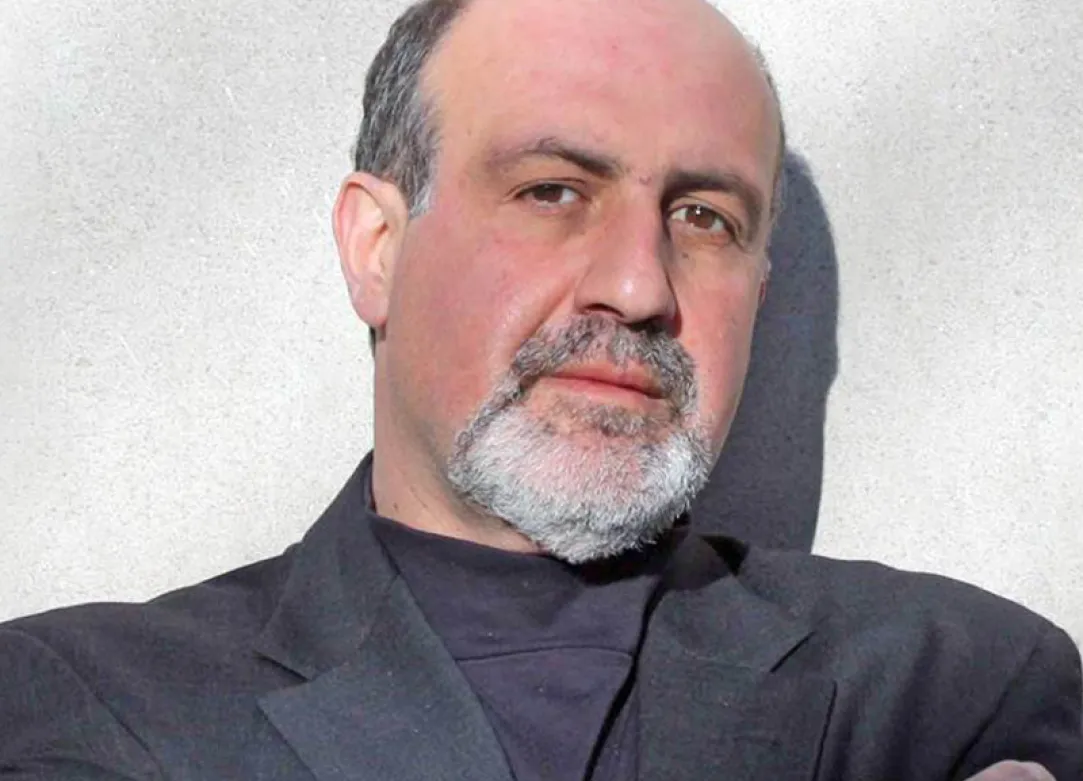

NOURIEL ROUBINI

Global economist who predicted the 2008 crisis and decodes the megatrends reshaping the world economy


  • World-renowned economist, advisor, educator, and portfolio manager
  • One of the world’s leading voices on macroeconomics and geopolitics
  • Advisor to governments, investors, and global business leaders
  • Expert on systemic risk, markets, and global economic transformation
  • International bestselling author and renowned economic commentator 
  • Professor Emeritus of Economics at NYU’s Stern School of Busines

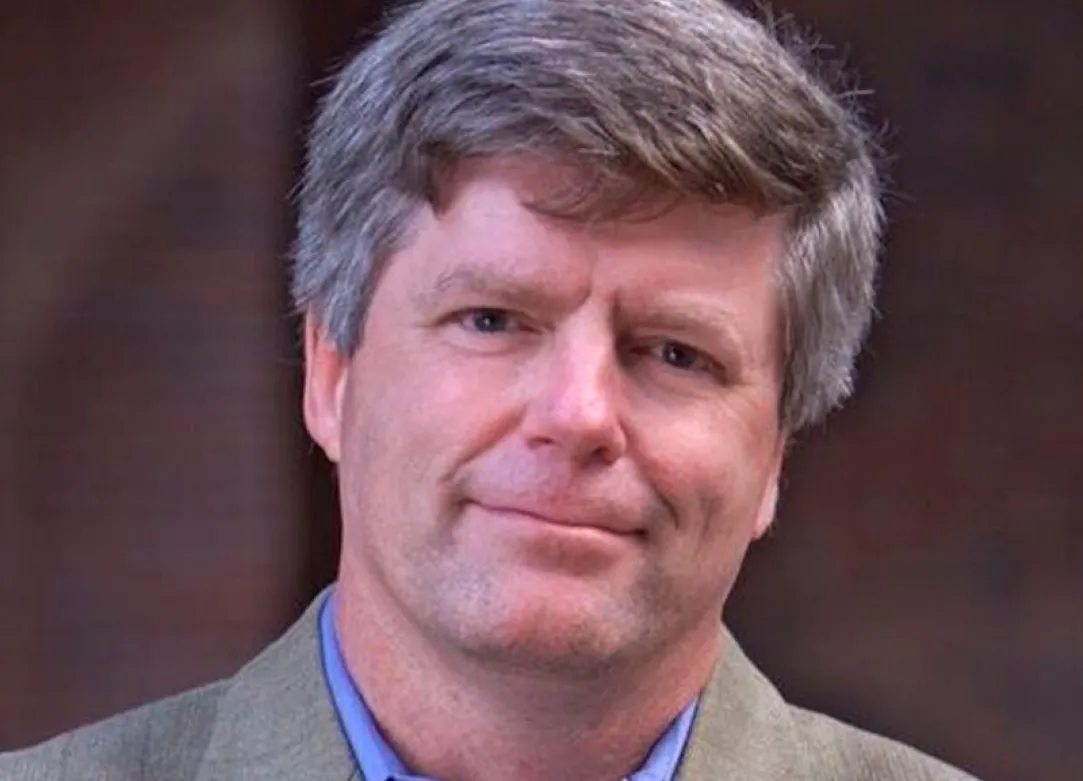
Dr. Nouriel Roubini is a world-renowned economist, advisor, educator, and portfolio manag-er, recognized globally for his expertise in international finance and economic policy. With decades of leadership across government, academia, and industry, he offers unparalleled insight into macroeconomic and geopolitical trends shaping the global economy.

Named by Time magazine as one of the “Top 100 Scientists and Thinkers,” Dr. Roubini earned international prominence for his accurate prediction of the 2008 global financial cri-sis—an achievement that cemented his reputation as one of the most influential and for-ward-looking voices in economics.

He is Chairman and CEO of Roubini Macro Associates, LLC, a New York–based consultan-cy providing strategic macroeconomic analysis. He also serves as Senior Economic Strate-gist to Hudson Bay Capital, Chief Economist and Portfolio Manager at Atlas Capital Team, and is Professor Emeritus of Economics at NYU’s Stern School of Business.

Dr. Roubini’s career includes senior policy and research roles at the White House Council of Economic Advisers, the U.S. Department of the Treasury, the International Monetary Fund, the Federal Reserve, and the World Bank. He also co-founded Roubini Global Economics (RGE), a leading consultancy for financial analysis.

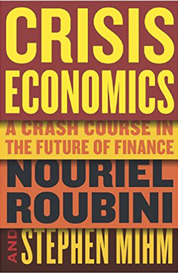
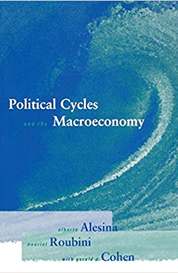
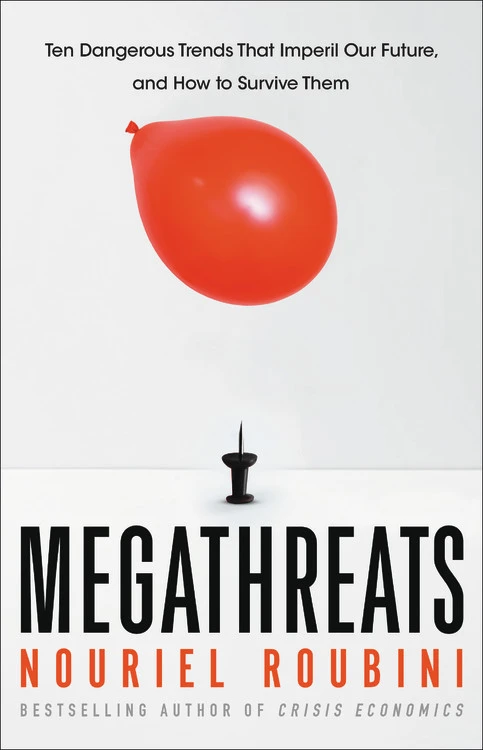
A prolific author and commentator, he has written extensively on global finance, systemic risk, and economic policy. His latest book, Megathreats: Ten Dangerous Trends That Imperil Our Future and How to Survive Them (2022), explores the vulnerabilities confronting the global economy. His earlier works include Political Cycles: Theory and Evidence (1997), Bailouts or Bail-ins? (2004), and the international bestseller Crisis Economics (2010). He contributes monthly columns to Project Syndicate, co-runs the economic research platform The BoomBust, and is a frequent presence on leading business networks. His insights have been profiled in The New York Times Magazine, Financial Times, and other premier outlets regularly seek his insights.

Dr. Roubini holds a Ph.D. in Economics from Harvard University and a B.A. in Economics from Bocconi University in Milan.
Nouriel tailors each presentation to the needs of his audience and is not limited to the topics listed below. Please ask us about any subject that interests you:

  • U.S Economic Outlook
  • Long Term Changes and Trends in the Global Economy
  • Geopolitical Risks in the Global Economy
  • Downside and Upside Risks in the Global Economy
  • Rise of the Machines, the Future of Work/Employment, Globalization and Inequality
  • Art as a New Asset Class and the Need for Regulation of the Art Market
  • Backlash from globalization
  • Fundamentals of macroeconomics
  • Fiscal policy

Upsides and Downsides in the Global Economy and Financial Markets

The outlook for the global economy and financial markets is mixed. The positives and upside include a pick-up in global growth after years of a new mediocre, profitable corporate firms, better business and consumer confidence, more optimistic investors with markets in risk-on mode, the rise of emerging markets, new technologies and innovation. The downside, however, are several: uncertainties about Trumponomics, the risks of European and Eurozone dis-integration, the potential for a hard landing of highly indebted China, the sluggish global growth and productivity in a world of high private and public debts, the frothiness in financial markets and the risks of assets and credit bubbles fed by easy monetary policies, the backlash against globalization and geopolitical risks. Markets are now bullish, but the economies are still sluggish. Roubini argues that a new policy framework is needed to minimize the downsides and maximize the upsides.

Globalization, Technology and Their Discontents

There recently has been a populist backlash against globalization in its many manifestations: free trade, migration, technological innovation and supra-national governance. This backlash is also associated with the rise in income and wealth inequality and the concerns that large parts of populations have seen their jobs and incomes threatened by the various elements of globalization. At the same time robotics, AI and automation may over time threaten lower skilled blue collar workers, as well as white collar jobs and wages even more than trade and migration. How severe is this backlash and its political manifestations in the form of the rise of populist leaders? Are protectionism, trade wars and sharp restrictions to migration the new norm or can globalization be improved and saved? Is the future of AI utopian or dystopian for workers? What are the appropriate policy responses to make sure globalization benefits most - rather than a few? Roubini provides a roadmap and answers to these questions.

Geopolitical Risks in the Global Economy

In this all-encompassing presentation, leading economist Nouriel Roubini surveys the geopolitical risks in the global economy that could affect markets in the next several years. Roubini also shares insights on how to resolve global economic, financial, trade, investments and geopolitical issues in a G-Zero world where the U.S. is no longer the dominant hyper-power, and where a number of other powers are on the rise.